 Leak Detection Pro
(602) 836-3562
Leak Detection Pro
(602) 836-3562
Modern Leak Detect Technologies: Non-Invasive Acoustic & Thermal Guide
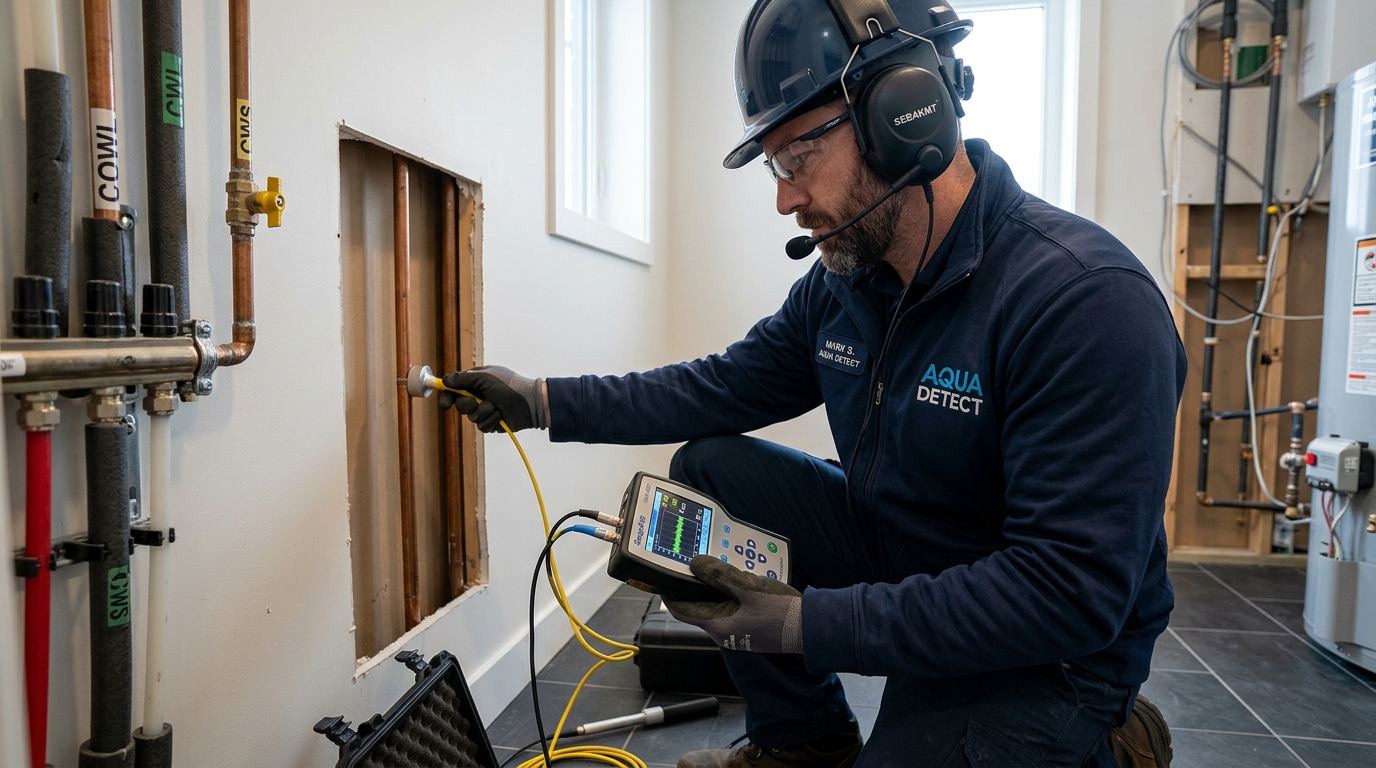
When an unexplained spike hits your water bill or moisture appears beneath floor tiles, the traditional response was costly and destructive: tearing open drywall, digging random holes, or jackhammering concrete foundations. Today, modern leak detect instrumentation pinpoints microscopic pipe ruptures with scientific accuracy before a single tool touches your walls or floors.
How Modern Electronic Leak Detect Works
Pressurized water escaping from a copper, PEX, or galvanized pipe emits physical energy in three measurable forms: sound vibrations, temperature differentials, and fluid pressure loss. Modern leak detect procedures leverage these principles through non-destructive testing (NDT):
1. High-Gain Acoustic Listening Sensors
As water at 50 to 70 PSI forces its way through an orifice smaller than a needle, it generates high-frequency turbulence and hiss. Ground microphones equipped with seismic accelerometers capture these sound waves through hard concrete, ceramic tile, soil, and subfloor materials:
- Narrowband Filtering: Technicians isolate specific frequencies (commonly 500 Hz to 2,500 Hz) while filtering out ambient street noise, air conditioning fans, and conversation.
- Acoustic Mapping: By comparing decibel levels at several surface points, the operator traces the peak sound node directly to the pipe breach coordinates.
2. High-Resolution Infrared Thermography (FLIR)
Thermal imaging cameras capture electromagnetic radiation in the long-infrared range (8–14 µm). Because evaporating water cools the surrounding building materials and domestic hot water lines radiate thermal heat, thermal cameras produce vivid real-time heat maps:
- Instantly reveals hot water plumes pooling beneath concrete slabs.
- Exposes moisture tracking inside drywall, insulation, and ceiling cavities.
- Pinpoints localized thermal anomalies without making physical contact.
3. Precision Pressure Decay & Isolation Manometers
Before deploying acoustic probes, technicians isolate individual plumbing systems (hot water loops, cold water supply lines, irrigation zones, and pool piping). By connecting high-resolution digital manometers and capping fixtures:
- If static pressure drops over a 15-minute test, system integrity is breached.
- Isolating zone by zone narrows the search area from an entire property to a specific room or loop.
4. Electromagnetic Line Locators & Tracer Signals
You cannot leak detect accurately if you do not know where the pipe runs. Electromagnetic transmitters induce a high-frequency radio signal onto conductive metallic pipes or tracer wires. A handheld receiver accurately traces the pipe’s three-dimensional path, depth, and turns beneath concrete foundations.
| Detection Method | Best Applied For | Depth Range | Non-Invasive? |
|---|---|---|---|
| Acoustic Ground Microphones | Pressurized water leaks in copper/PEX under slab | Up to 6–8 feet underground | 100% Non-destructive |
| Infrared Thermography | Hot water leaks, ceiling leaks, wall moisture | Surface to 4–6 inches depth | 100% Non-destructive |
| Digital Combustible Sniffers | Natural gas & propane line joints and valves | PPM sensitivity in open air/cavities | 100% Non-destructive |
| Fiber-Optic Sewer Cameras | Drain line bellies, roots, cracks, separations | Up to 200 feet inside pipe | Direct visual inspection |
Why Early Leak Detect Testing Saves Thousands of Dollars
Water leaks do not improve with time. In Arizona’s desert soil, an undetected water leak beneath a foundation causes soil swelling, erosion voids, and severe structural deflection. By opting for professional electronic leak detect diagnostics early:
- You avoid tearing up expensive hardwood, marble, or travertine tile floors.
- You eliminate the risk of black mold colonization inside wall cavities.
- Plumbers can perform targeted spot repairs or clean overhead reroutes rather than extensive demolition.
Explore our specialized guides on water leak detection, slab leak detection, and gas leak detection.
Need expert leak detect service in Phoenix?
Connect immediately with technicians equipped with state-of-the-art acoustic and thermal rigs.
Call Now: (602) 836-3562Frequently Asked Questions
Can leak detect equipment find leaks in plastic PEX pipes?
Yes. While metallic copper pipes transmit sound vibrations better than flexible PEX, sensitive acoustic listening sensors and correlation equipment paired with pressure decay testing accurately pinpoint PEX failures as well.
How long does a full leak detect inspection take?
A typical residential electronic leak detection evaluation takes between 1 and 3 hours, depending on home size, number of bathrooms, and complexity of the plumbing network.
Will I receive an itemized report after the test?
Yes. Reputable leak detection contractors provide a comprehensive diagnostic report detailing the location, depth, pipe material, and recommended repair options, which can be submitted to your homeowner insurance adjuster.