Thermography
Infrared Thermal Cameras
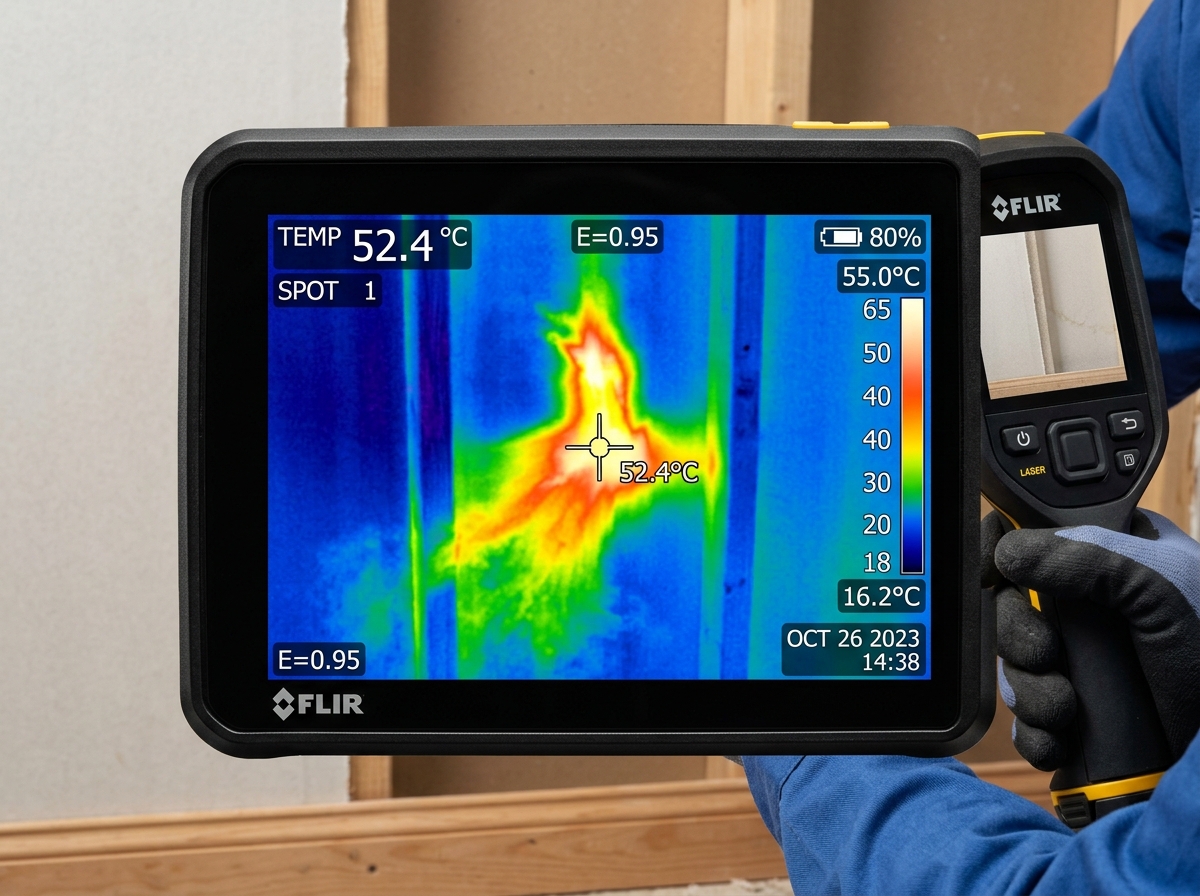
Thermal imagers detect the thermal gradient as 120°F water radiates upward through solid concrete, mapping out the underground piping layout and identifying the epicenter plume.
 Leak Detection Pro
(602) 836-3562
Leak Detection Pro
(602) 836-3562
A slab leak occurs when a pressurized water line fails under or within a concrete slab foundation. Because pipes are encased beneath four to six inches of poured concrete, electronic locating technology is essential to isolate the leak without massive demolition.
Call Now for Free Local Help: (602) 836-3562
Most single-family homes constructed in North Mountain Village, Moon Valley, and Sunnyslope sit atop concrete slab-on-grade foundations. Signs of an active slab leak include:
Locating a slab leak without exploratory trenching requires multi-technology triangulation:
Thermal imagers detect the thermal gradient as 120°F water radiates upward through solid concrete, mapping out the underground piping layout and identifying the epicenter plume.
Using ultra-sensitive ground contact microphones with wind-isolated housings, specialists listen through solid slab matrices to distinguish the distinct hiss of pressurized water spray.
By connecting a low-frequency transmitter directly to cold and hot water manifolds, locators trace the precise horizontal vector and depth of copper or galvanized pipes beneath the concrete.
Once your independent provider pinpoints the exact coordinates, they will review appropriate repair strategies:
Shut off your main water valve if water is actively dampening floors. Call (602) 836-3562 to be connected immediately with an independent local leak detection provider serving North Mountain Village, Phoenix.
Free referral service. Connected providers arrive with non-invasive acoustic and thermal imaging equipment.
Call Now for Free Local Help: (602) 836-3562Yes. Subterranean leaks wash away foundational dirt and gravel, which can lead to slab settling, drywall separation, and massive water loss. Prompt diagnosis is critical.
Yes. Modern acoustic listening equipment and thermal imaging pinpoint the exact leak location through the floor before any concrete is touched.
Many homeowner insurance policies cover the cost of leak detection and the tear-out/repair of access surfaces, though coverage varies by carrier and policy. Ask your independent provider for an itemized diagnostic report for your insurance claims adjuster.